


Varicose veins are a pathological and irreversible change in the walls of peripheral veins with insufficiency of the valve apparatus and impaired blood circulation.Veins of different locations are subject to varicose vein transformation, but the vessels of the superficial venous network in the legs are most often affected, which is why varicose veins usually mean a disease of the veins of the lower extremities.
How do varicose veins develop?
With varicose veins, only peripheral superficial venous vessels are subject to pathological transformation - this is due to the structural features of the walls and the physiology of blood outflow from the extremities.It is these pathogenetic moments that are crucial.All other predisposing factors affect the entire vascular system, but do not lead to characteristic changes in the central veins and arteries of any caliber.
Let's consider the pathogenesis of varicose veins:
- Aseptic inflammation. It begins at the endothelium of the veins and then spreads across the entire thickness of the vessel.The triggering mechanism in most cases is a slowing of blood flow;There is a parietal grouping of cellular elements of the blood with leukocyte rolling - grouping and “rolling” of leukocytes along the surface of the endothelium.Over time, they tend to stick together, leading to the release of inflammatory mediators.There are no external changes at this point.
- Remodeling of the walls of superficial veins and valves. Leads to changes in density and elasticity.This is promoted by aseptic inflammation, genetically determined defects in connective tissue proteins, mechanical microdamage to the endothelium and some other factors.In affected vessels, the ability to reversibly compensate for fluctuations in venous pressure is significantly reduced and they become stiff.
- Persistent and progressive expansion of the lumen of the affected veins. These changes are initially quite local;Subsequently, the pathological process not only spreads along the length of a vessel, but also affects other components of the peripheral venous network.
- Compensatory lengthening of the affected vein with the development of pronounced pathological curvatures. Characteristic bulging nodes form, which give the disease its name: “Varix” is translated from Latin as “swelling”.
- Development of heart valve insufficiency. Functional failure of the valves in the lumen of the affected superficial veins with reverse blood flow (vertical reflux).It is initially of a relative nature and manifests itself only in a noticeable increase in peripheral venous pressure.Subsequently, the error becomes absolute - the valve walls do not close completely under any circumstances.Venous stasis (blood congestion) occurs with the formation of venous insufficiency.
- Involvement of perforating veins in the process.They are also called communicants or commissars.Their pathological expansion is also accompanied by valve insufficiency, which contributes to the pathological blood flow from the deep to the superficial venous network (horizontal reflux).Increased venous insufficiency.
All these changes are irreversible and persist even with the complete elimination of provoking and predisposing factors, therefore it is impossible to cure already developed varicose veins with conservative methods;It is only temporarily possible to partially compensate for the disruptions.
Causes of varicose veins
Varicose veins are a polyetiological disease, the development of which is promoted by external and internal (endogenous) factors.The main reasons for the development of varicose veins:
- Hereditary factor.
- Low mobility, longer sitting position.
- In women – changes in hormonal status during pregnancy, taking oral contraceptives and conducting hormone replacement therapy.
- Conditions associated with partial compression of the pelvic veins: pregnancy (especially multiple pregnancy or with polyhydramnios), mass formations in the abdominal cavity, some intestinal diseases.Constipation and chronic lung diseases with cough, leading to increased intra-abdominal pressure, lead to disruption of venous outflow at the pelvic level.
- Increased body weight.
All people are predisposed to developing varicose veins.This is due to the vertical posture of the body, as a result of which the blood tends to the distal parts of the lower extremities under the influence of gravity, and the veins are subjected to increased stress and are more easily deformed.
Symptoms and manifestations of varicose veins
Symptoms of varicose veins of the superficial veins of the thigh and leg include:
- Visible changes in the affected veins.Varicose veins are tortuous, overly contoured, dark, visible through the skin, and prominent.Pulsation is not characteristic of them.As the disease progresses, local nodular bulges appear on the legs, which often form entire conglomerates and do not completely disappear when lying on the back.In patients with increased body weight, changes in the veins often remain practically unnoticed for a long time and are masked by excessive subcutaneous fat.
- Swelling of the feet and legs after standing and sitting for a long time, in the evening when staying in elevated ambient temperatures.Such venous edema is not accompanied by cyanosis of the distal extremities, which can be observed in heart failure.They decrease and disappear even after rest (including night sleep), when the legs are kept in an elevated position after performing special gymnastic exercises to activate the “muscle pump” of the lower leg.Swelling is one of the first signs of chronic venous insufficiency with varicose veins.
- A feeling of heaviness and fullness in the legs, even if there is no obvious swelling.Such complaints occur in conditions that favor pathological blood deposition in the distal parts of the lower extremities.Complaints are most often observed in the evening and after a long stay in an upright position with little physical activity.
- Signs of ischemia of the limb muscles affected by varicose veins: increased muscle fatigue, sometimes cramps.
- Unpleasant sensations in the legs, which usually increase with increasing swelling due to the reaction of the soft tissues and branches of the peripheral nerves of the leg to compression by an excessive amount of intercellular fluid.Another possible cause of such paresthesias is dysmetabolic trophic disorders.
- Visible trophic disorders of the skin and underlying soft tissue.These can include dry or eczematous dermatitis, hyperpigmentation, lipodermatosclerosis (thickening, hardening of the dermis and tissue), and ulcers.
Symptoms of varicose veins of the lower extremities appear quite early, although not all patients pay attention to it in time.The order in which new features are added may vary.In some patients, a cosmetic defect in the form of significantly changed veins is initially noticeable, while in others the disease initially manifests itself in the form of venous insufficiency.
Steps
The stages of varicose veins are determined according to the CEAP classification:
- C0 – no signs of pathology;
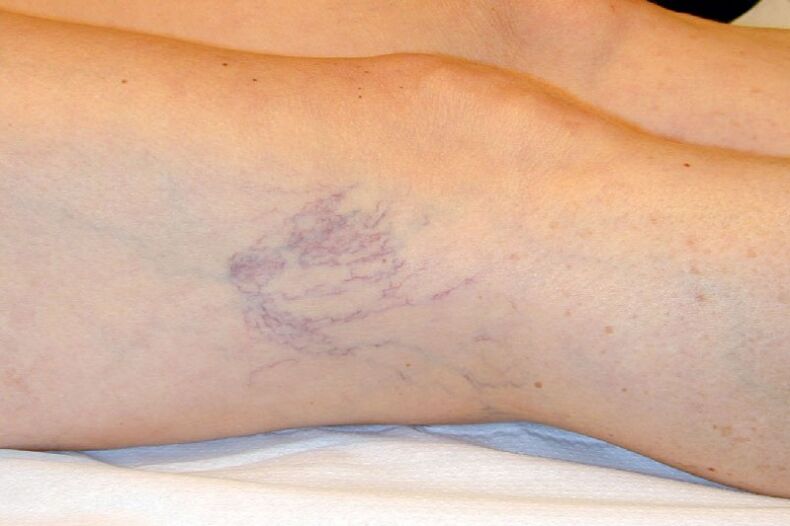
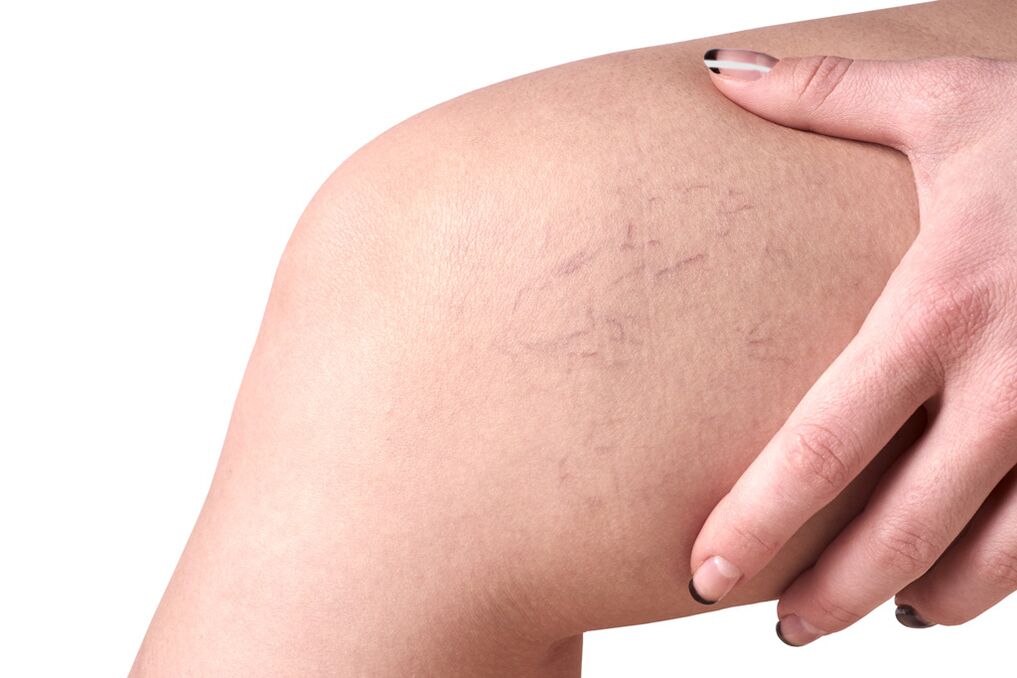
- C1 – presence of reticular varicose veins or telangiectasia;
- C2 – varicose veins;
- C2r – recurrent varicose veins;
- C3 – swelling of the extremity;
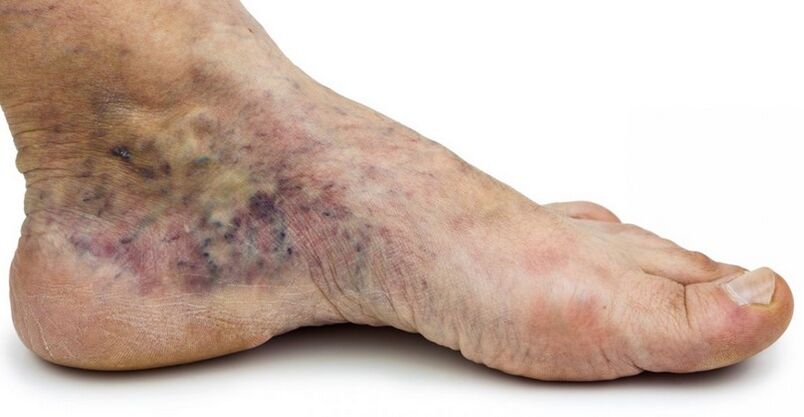
- C4a – trophic changes: hyperpigmentation or venous eczema;
- C4b – trophic changes in the form of lipodermatosclerosis or atrophy of white skin;
- C4c – Corona venosus of the foot;
- C5 – protracted trophic ulcer;
- C6 – open trophic ulcer.
- C6r – recurrent open trophic ulcer.
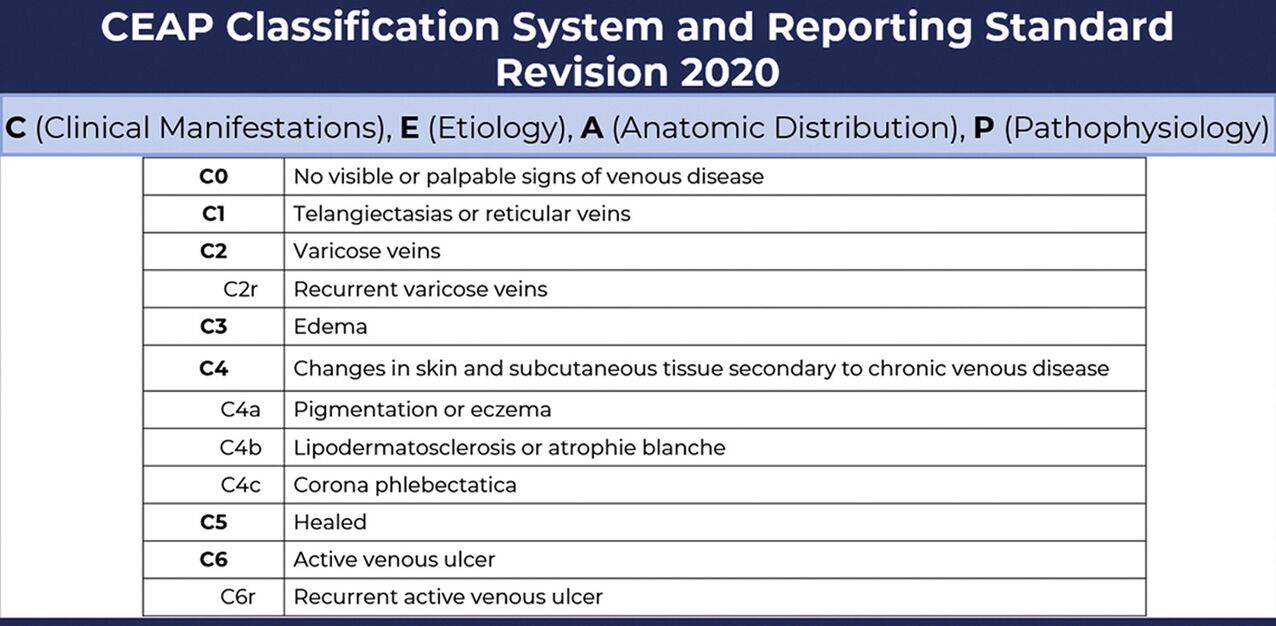
The CEAP classification was created in 1994 and is now internationally and generally recognized.Used by phlebologists when making a diagnosis.
For example, in class C1, only one cosmetic defect is detected - dilated reticular veins of about 1 mm.in diameter, and with C4c it is no longer possible to miss serious trophic disturbances.
%20and%20reticular%20veins.jpg)
diagnosis
A basic examination to confirm the diagnosis of varicose veins of the lower extremities and to clarify the extent and type of the disease includes:
- Clinical examination.The phlebologist determines the course and condition of visible superficial veins, changes in the skin and soft tissues, and the presence of edema.Functional tests are performed to assess vertical reflux and determine the approximate extent of horizontal reflux.The patient survey is aimed at clarifying the predisposing and provoking factors, duration and features of the development of the disease.
- Ultrasound examination.In the case of varicose veins, it is not a conventional ultrasound that is most informative, but rather an assessment of blood flow using Doppler-Doppler ultrasound (USD).The study shows the speed of blood movement, the presence of pathological venovenous reflux and impaired vascular patency.This information is necessary for the doctor to select the necessary treatment regimen.
- Hemostasiogram (blood tests for a comprehensive assessment of the coagulation system).
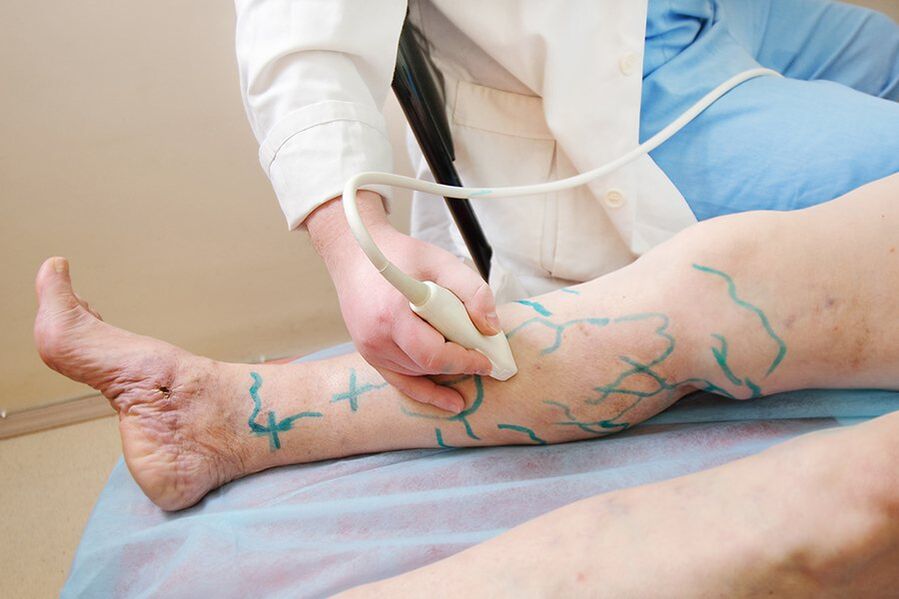
Depending on the indications, multi-slice computed tomography (MS-CT) is carried out - a high-tech study in some cases becomes the main technique for determining the picture of damage to the venous system.
In modern medicine, other diagnostic techniques are also used - plethysmography, laser Doppler flowmetry.They are not available to a wide range of patients;The results achieved are usually not decisive for determining treatment tactics.As a rule, a basic examination is sufficient, which, if necessary, is supplemented by consultations with specialized specialists (endocrinologist, hematologist, cardiologist and others).Previously, several stages of varicose veins of the legs were distinguished.Currently, when making a diagnosis, phlebologists use the CEAP classification of chronic venous diseases, which includes the characteristics of the case according to clinical, etiological, anatomical and pathophysiological features.
The danger of varicose veins
Many people believe that varicose veins of the lower extremities are primarily a cosmetic problem.In fact, it is often the external unattractiveness of the legs with knotted, protruding blue-purple vessels or spider veins that is the main reason for a visit to the doctor.
Pathologically dilated peripheral veins are a disease that should not be underestimated.It can significantly worsen the patient's well-being and even lead to potentially life-threatening complications.And this is primarily due to the development of chronic venous insufficiency due to persistent and progressive hemodynamic disorders.Other unpleasant consequences are also possible.
Consequences of advanced varicose veins:
- Significant deterioration in the patient's quality of life.Significant discomfort and even loss of performance with varicose veins are caused by severe leg syndrome, swelling, night cramps, poor healing and recurrent ulcers.
- Changes in soft tissues with a decrease in the external attractiveness of the legs, which is especially important for women.In addition, hyperpigmentation, lipodermatosclerosis and traces of healed ulcers usually remain even after the affected veins are removed, especially if the surgical treatment was carried out against the background of already pronounced pronounced trophic disorders.
- Bleeding from ruptured varicose veins or varicose veins at the base of trophic ulcers.
- Development of thrombosis and thrombophlebitis of superficial veins.It is fraught not only with local hemodynamic disorders and inflammation, but also with distant thromboembolism with infarctions of various organs and acute life-threatening conditions.
- Deep vein thrombosis is an even more dangerous condition in terms of thromboembolism.
Already developed complications of varicose veins of the superficial veins of the thigh and leg not only negatively affect the patient's condition and the prognosis of the disease.They significantly reduce the likelihood of achieving a quick and sufficient result, even with radical treatment methods.
Is the disease always dangerous?
Varicose veins of the lower extremities with valve insufficiency of the saphenous veins are not the only possible variant of this pathology.There is also a so-called “cosmetic” variant of varicose veins.According to the classification of chronic venous diseases, CEAP is C1, features of the form:
- Damage to small intradermal vessels up to 3 mm in diameter.They can be subepidermal or reticular.
- The appearance of spider veins and reticular varicose veins in the form of a fine superficial network.
- Absence of vertical or horizontal pathological venovenous reflux.The affected small vessels have no valves and communicate only via an esophageal stalk with small tributaries of the saphenous veins.They collect blood from individual sections of the dermis and drain it into larger, deeper vessels.Impaired blood circulation at this level does not contribute to the development of chronic venous insufficiency.
This course of the disease does not lead to the development of clinically significant complications.In fact, patients' complaints are due to a cosmetic defect.However, this does not mean that a person with spider veins is excluded from damage to larger veins.In such a situation, C1 is no longer diagnosed, but C2 and subsequent classes according to the CEAP classification.
Treatment of varicose veins
Treatment of varicose veins should begin not with the development of complications, but at the stage of primary changes and minimally pronounced signs of venous insufficiency.You can expect a rapid onset of the expected effect, a complete resolution of symptoms and a low probability of relapse.Treatment for advanced varicose veins will not be as effective.Sometimes its task is only to slow down the progression of the disease, create conditions for the healing of trophic ulcers and reduce the severity of chronic venous insufficiency.
In general, all methods of treating varicose veins of the lower extremities can be divided into non-surgical (conservative) and surgical (radical) treatments.Traditionally, most patients prefer gentle techniques and postpone the decision to undergo surgery until complications arise that cannot be corrected.And many of them do not even consult a doctor and resort to self-medication.Self-medication often leads to complications of pathology.
Conservative treatment
The conservative treatment regimen for varicose veins includes:
- Systemic drug therapy.The aim is to improve the rheological properties of blood to prevent thrombosis, achieve an anti-inflammatory effect, increase the elasticity of the vascular wall and stimulate tissue regeneration.
- Local drug therapy (ointments, creams, gels).External agents are designed to improve microcirculation, reduce swelling, increase venous tone and heal trophic ulcers.
- Therapeutic exercises increase the efficiency of the lower leg muscle pump and thereby improve blood flow from the legs.
- Use of compression stockings.Compression stockings and tights provide dosed compression of superficial veins, thereby reducing the tendency to blood deposits and edema, improving well-being and reducing the likelihood of thrombosis.
- Physiotherapy.They are used mainly in the absence of open trophic ulcers and outside the acute stage of thrombophlebitis.Hardware pneumocompression, darsonvalization, galvanization, UHF therapy, UV therapy, hydrotherapy and ozone therapy are used.The goals of physical therapy include improving venous and lymphatic drainage, improving microcirculation, stimulating regeneration, and reducing the severity of symptoms.
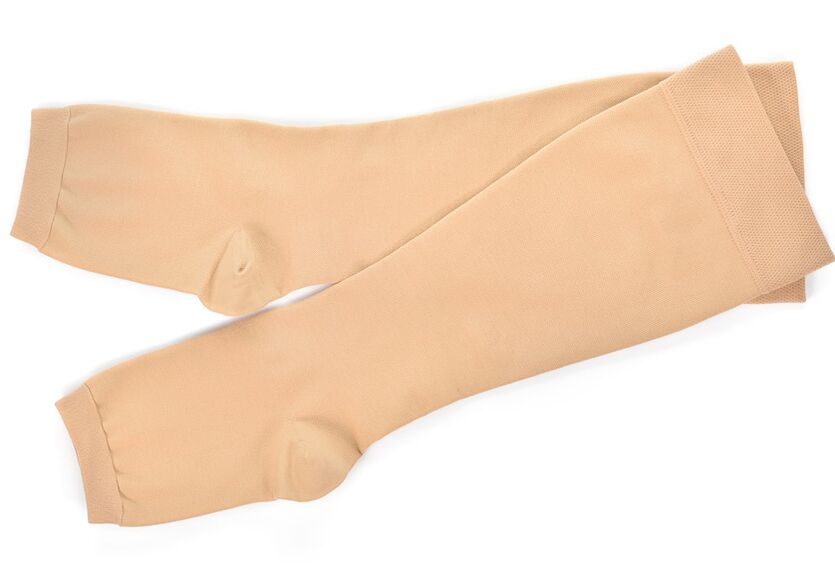
Drugs do not restore healthy blood flow to already altered veins;they remain twisted and expanded.And even a slight increase in the tone of the vascular wall under the influence of phlebotonics cannot completely correct valve insufficiency.
You should not expect high results from conservative treatment.It relieves pain and swelling, reduces the risk of thrombosis and improves healing of trophic disorders.However, with a conservative approach, it is impossible to save the patient from varicose veins and prevent further progression of the disease.
Surgical treatment
An invasive (surgical) method of treating varicose veins is aimed at excluding the affected vessel and its main tributaries from general blood flow (by removal or obliteration) and eliminating horizontal venovenous reflux.Does not aggravate tissue ischemia, improves trophism by significantly reducing (or even eliminating) venous congestion.This treatment not only eliminates the cosmetic defect, but also helps manage chronic venous insufficiency.
Classic surgical methods for the treatment of varicose veins of the lower extremities:
- A crossectomy involves the complete division of a ligated large superficial vein at the point where it flows into the deep venous network.
- Phlebectomy – removal of the superficial vein affected by varicose veins (great or small saphenous vein).This is done by stripping (pulling, pulling out) the vessel with instruments through small incisions.Currently it is combined with crossectomy and tributary removal.
- Miniphlebectomy – removal of large perforators and side branches through small incisions or punctures.
For a long time, the main method of surgical treatment was open surgery, its disadvantages:
- Significant blood loss;
- Bleeding in the surgical area, sometimes requiring repeat surgery to remove blood.
- Lymphostasis due to the crossing of lymphatic vessels.
- Severe pain syndrome.
- Long-term disability.
Modern alternative to surgery
Endovascular techniques are considered minimally invasive procedures;they do not require any incisions.They are not as traumatic and are in no way inferior to classic operations in terms of their effectiveness.Complications and relapses occur less frequently than after operations.
Minimally invasive methods:
- Laser destruction
- Sclerotherapy/cryosclerotherapy
- Radio frequency extinction.
With minimally invasive methods, the vein affected by varicose veins is not removed as in classic operations.Its wall is irradiated from the inside with laser or radiofrequency energy and, in sclerotherapy, with a sclerosing agent.This provokes “gluing” of the vessel and its subsequent fibrosis and replacement with connective tissue.This closure of the vessel lumen is called obliteration.And when stars are RFM, they are actually vaporized under the influence of radio frequency waves.